
Let it Scream! The story behind the model
2026 has brought us two new models so far (oooh, foreshadowing), and here’s the story behind the newest addition to the Sully Guitars model lineup, the Scream!
What’s all the Screaming about?
Yes, I’m going to milk these puns for as long as humanly possible. Sorry.
Late winter/early Spring of 2026 was a time of some very welcome inspiration. The Trella 24 happened, and then the Scream came out of nowhere, like a faint cry from a distance. I’m sorry, I’ll stop. It really was just one of those things where I stopped whatever I was working on, went to my desk and started playing around with this concept that was in my brain. I landed on two viable shapes; the one you see here and one that skewed a little closer into Supernova territory. I shared the drawings with a small group of friends, and I was happy that the group was split 50/50 in favor of each design. Like I often do, I live with the idea for a little bit, and then make body templates so I can see if it works in real life, or if I need to tweak things a little. In this case, I cut them out of cardboard, hung them on the wall, and looked at them for a few days.
After almost two weeks, I got to work and made the thing.
Some of you know that I really don’t like making neck through guitars, and a big reason is because the process for making them is so different from how we normally make our bolt on and set neck models. So, if I don’t like making neck throughs, why did I make this a neck through? Mostly because in my mind, that’s how it needed to be. The added bonus is that the more neck throughs I make, the more the process gets easier. Or at least less of a hassle.
Anyway, I had a maple neck through blank and some poplar on hand, so I figured I’d use that. I also did my best to document the machining process via time lapse videos, and I’ll do my best to share that over the next few months.
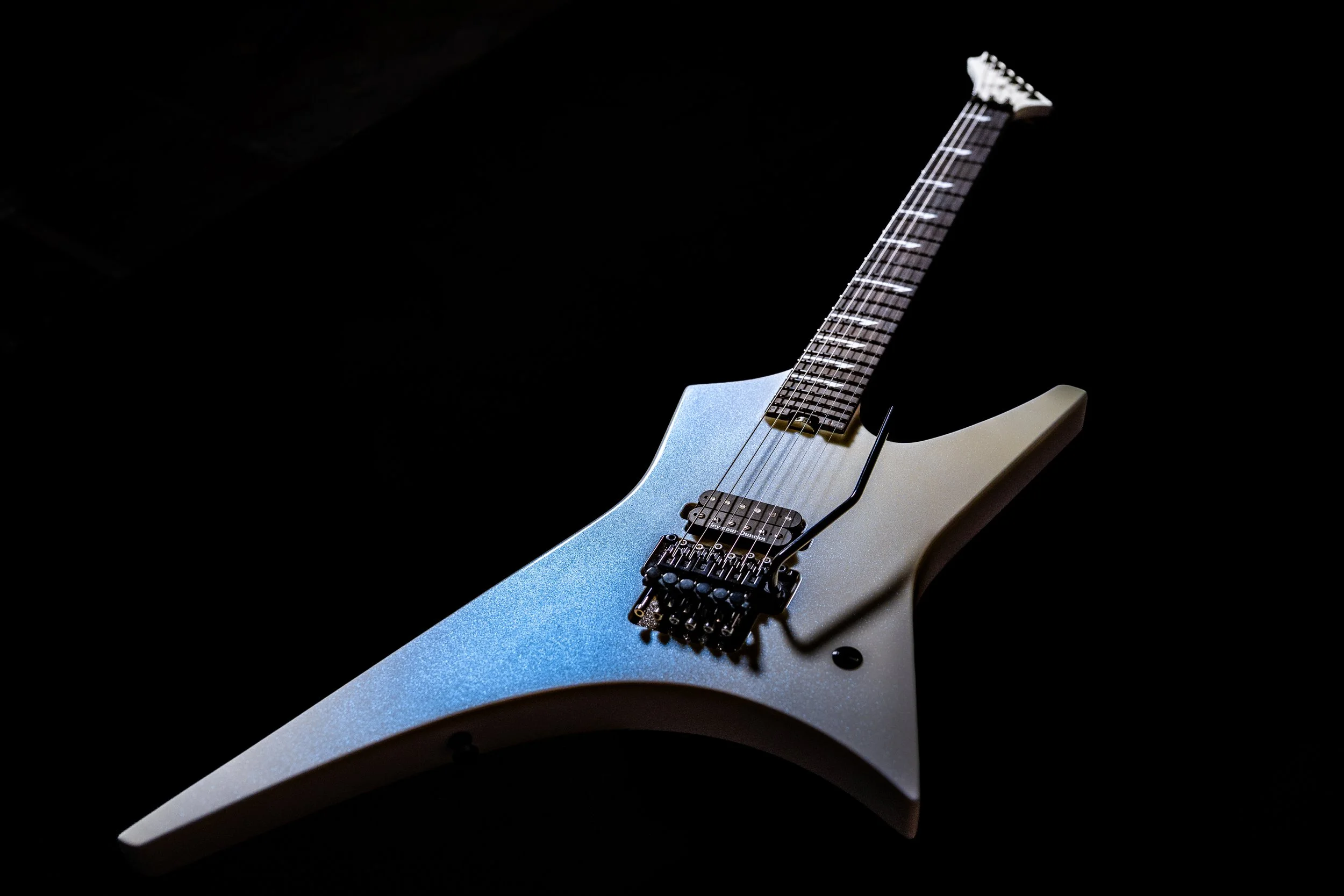
Scream photo by Chris Allen
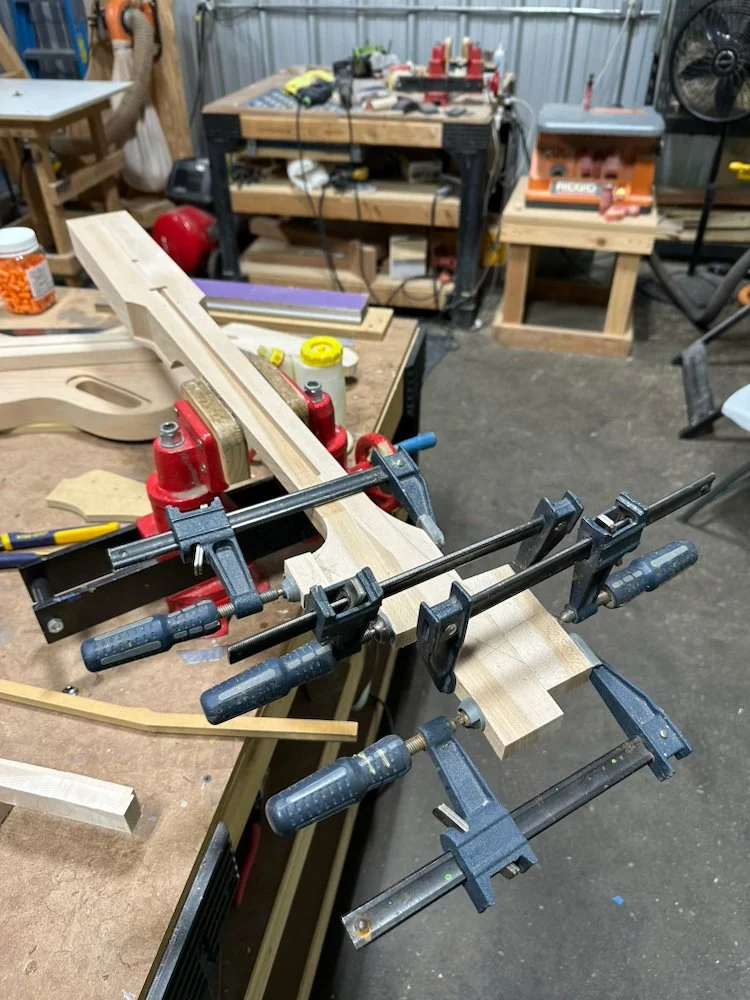
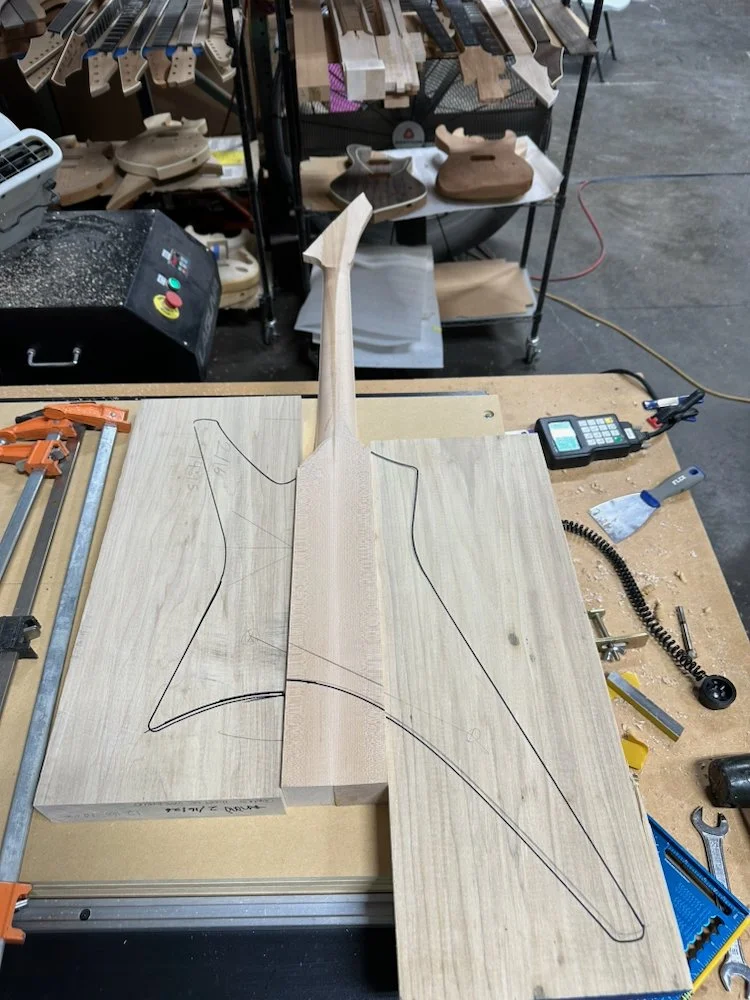
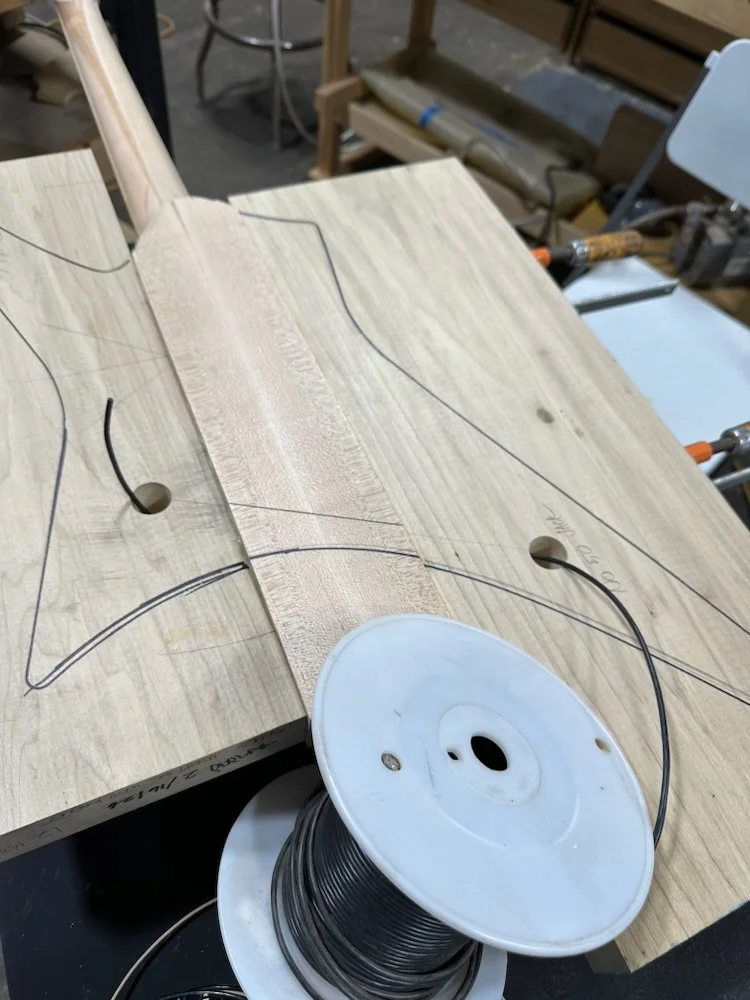
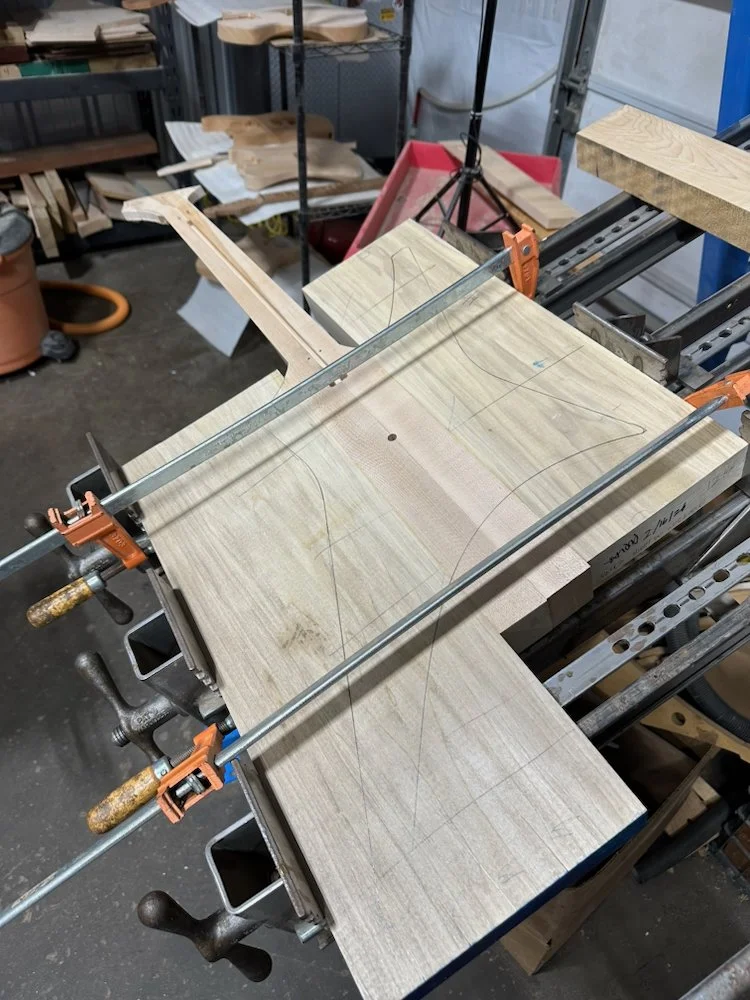
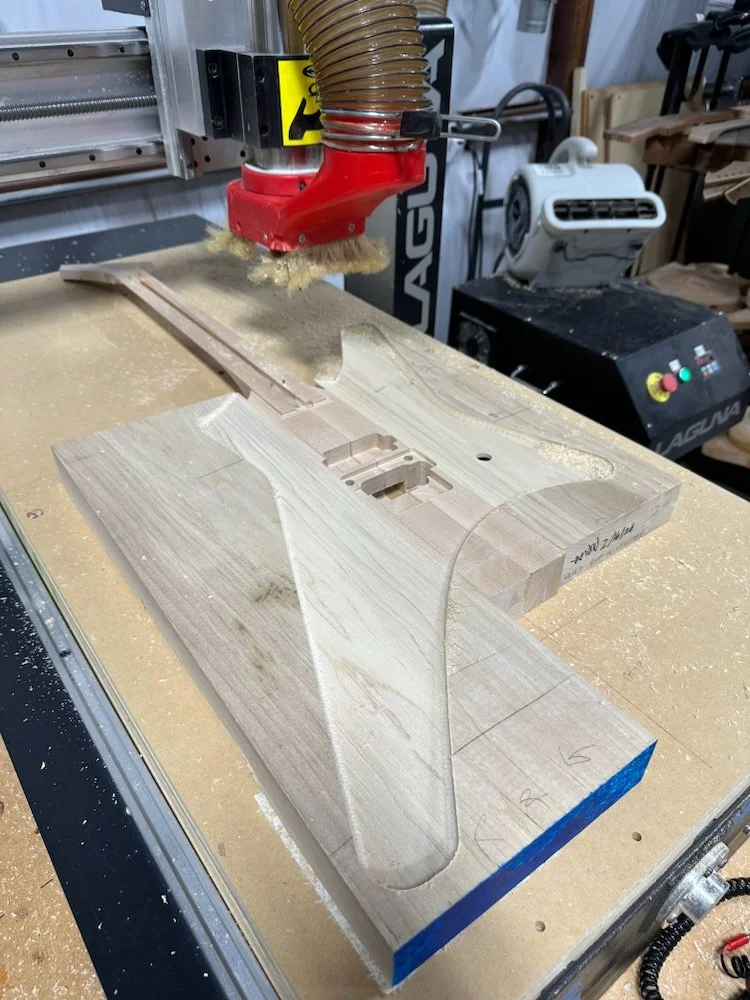
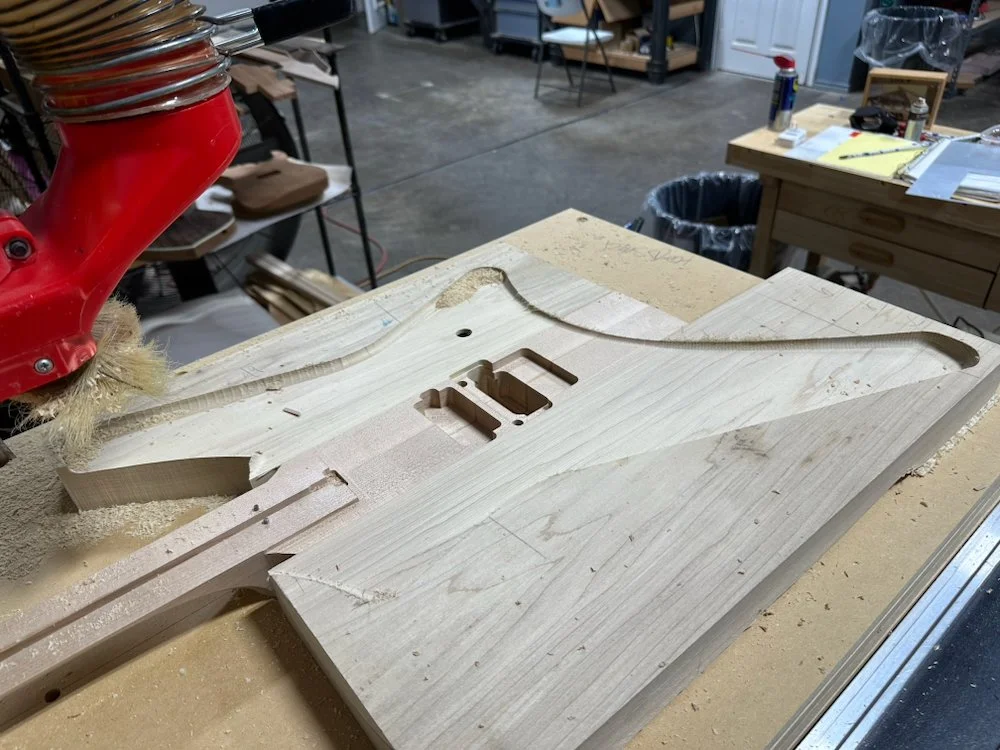
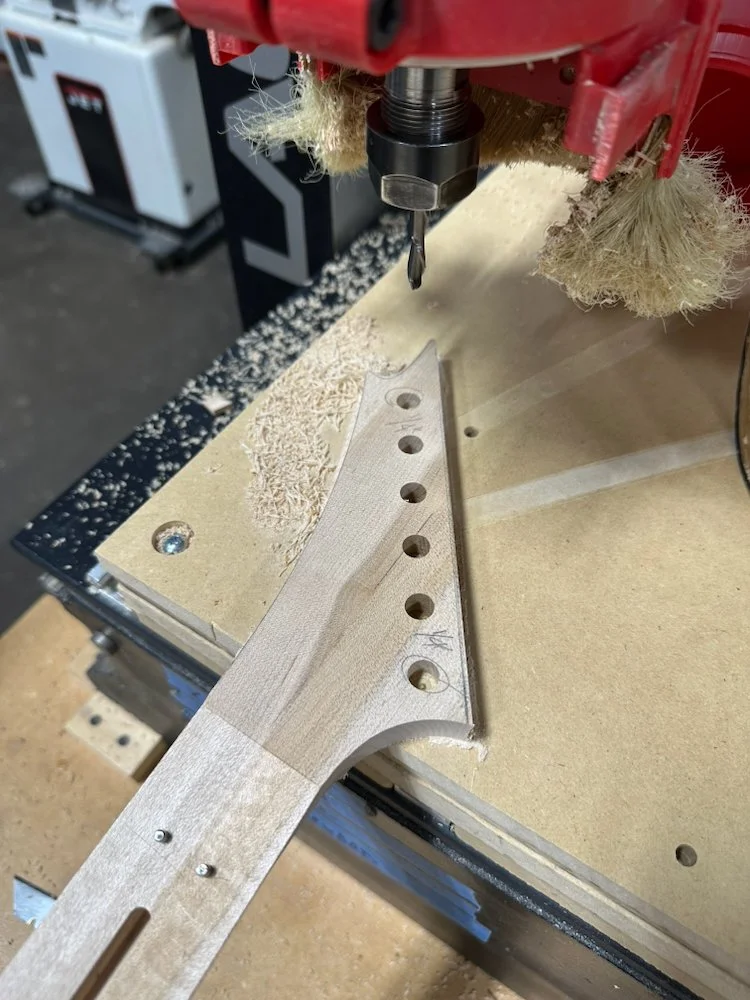
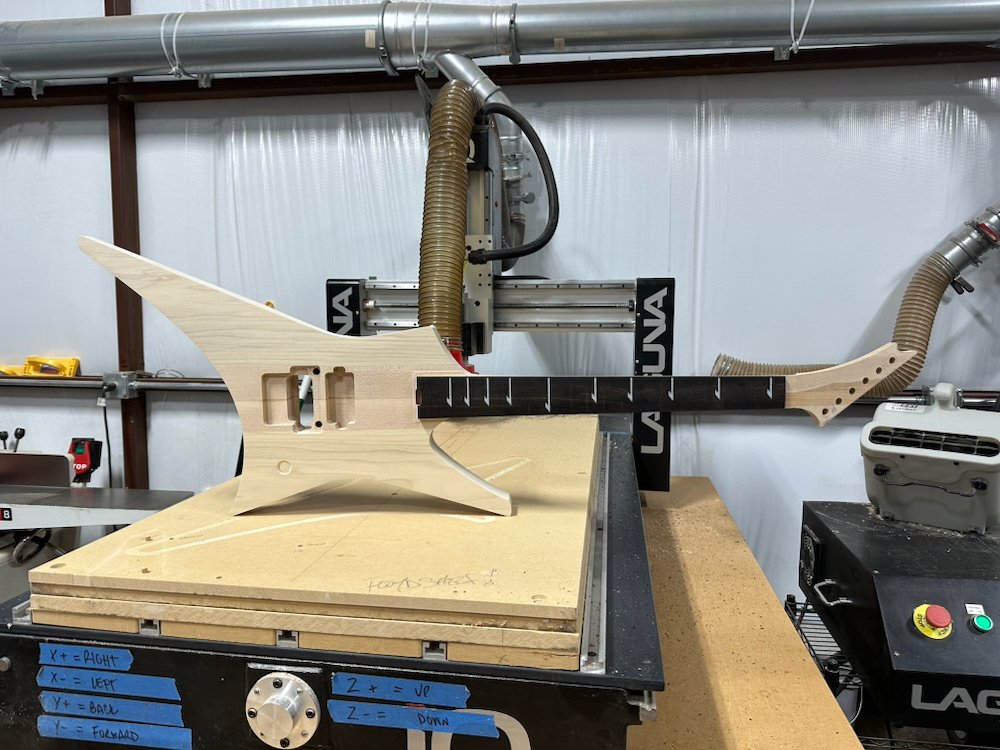
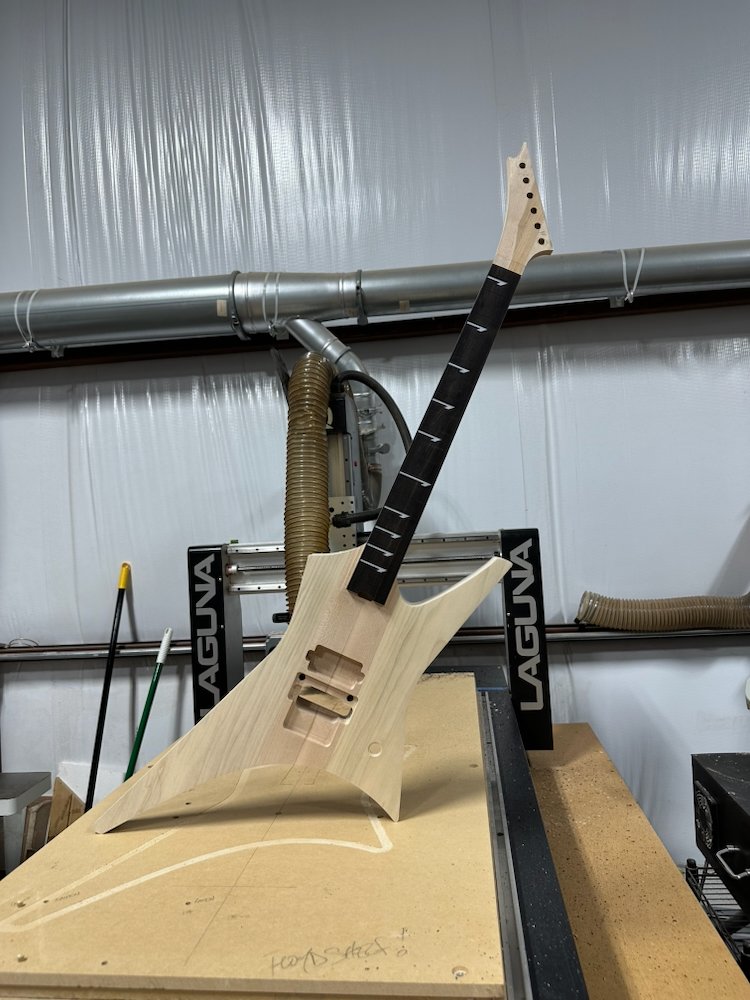
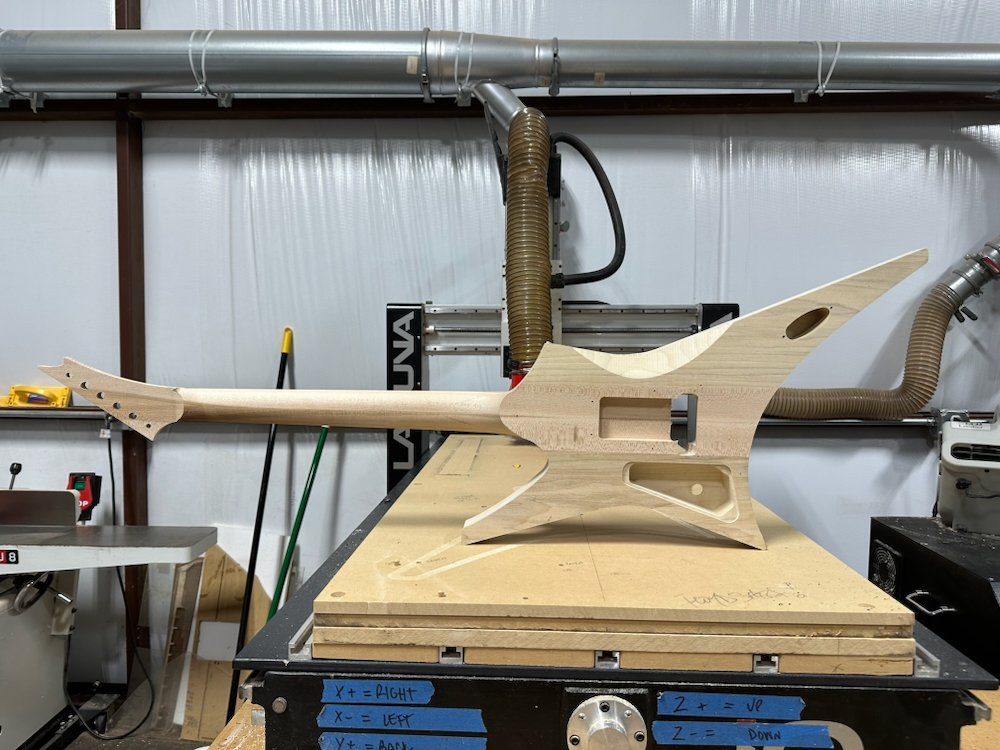
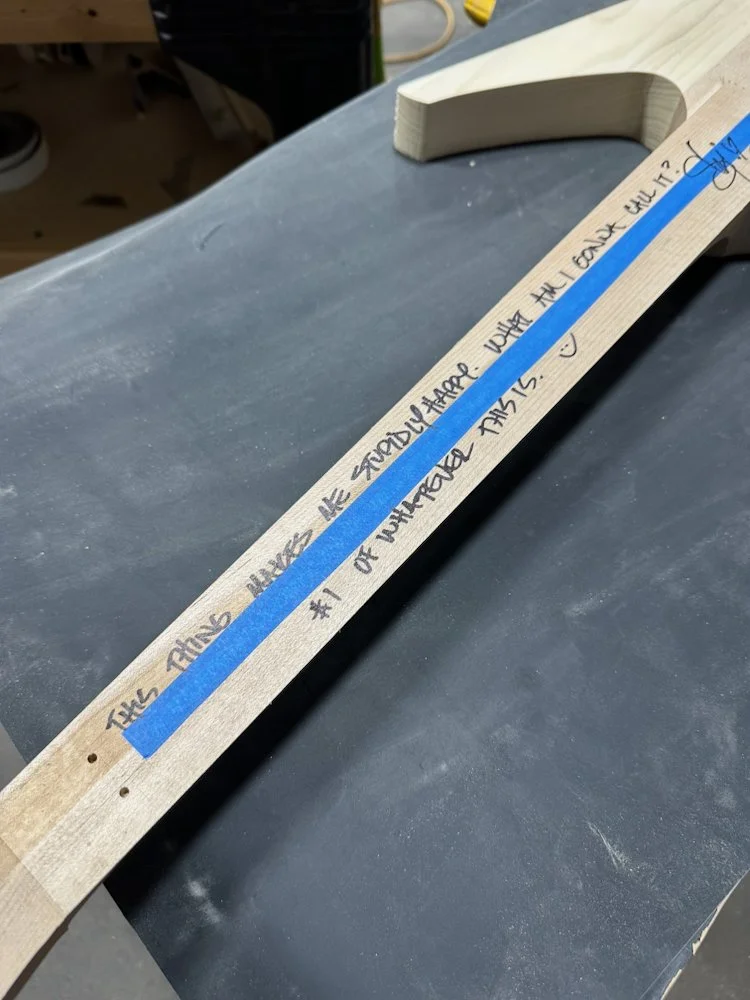
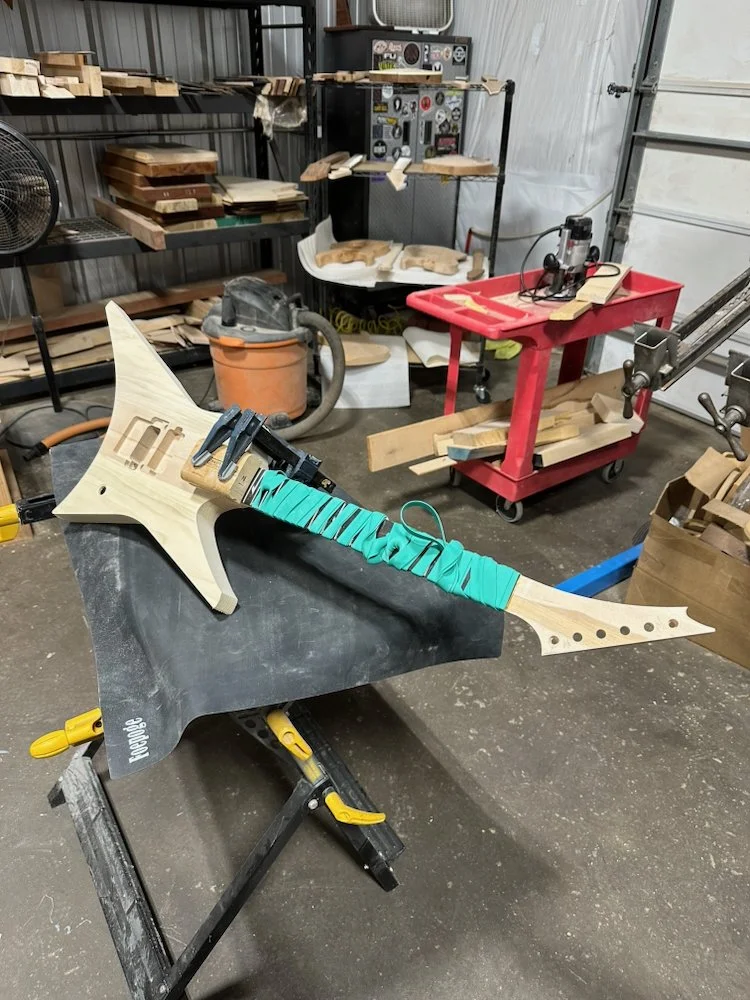
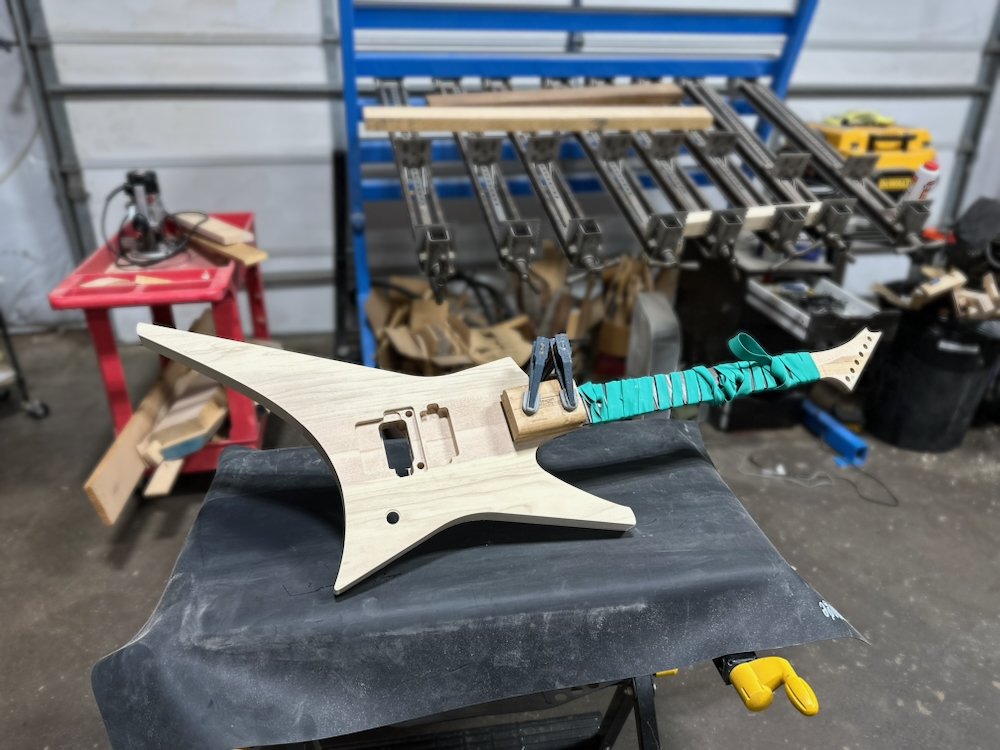
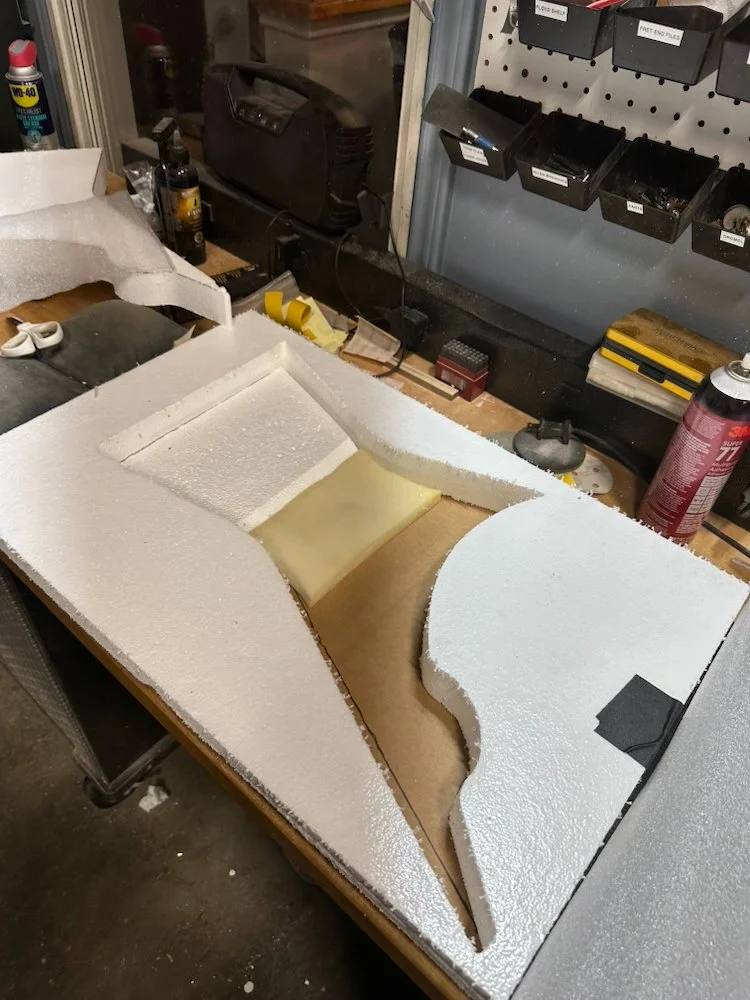
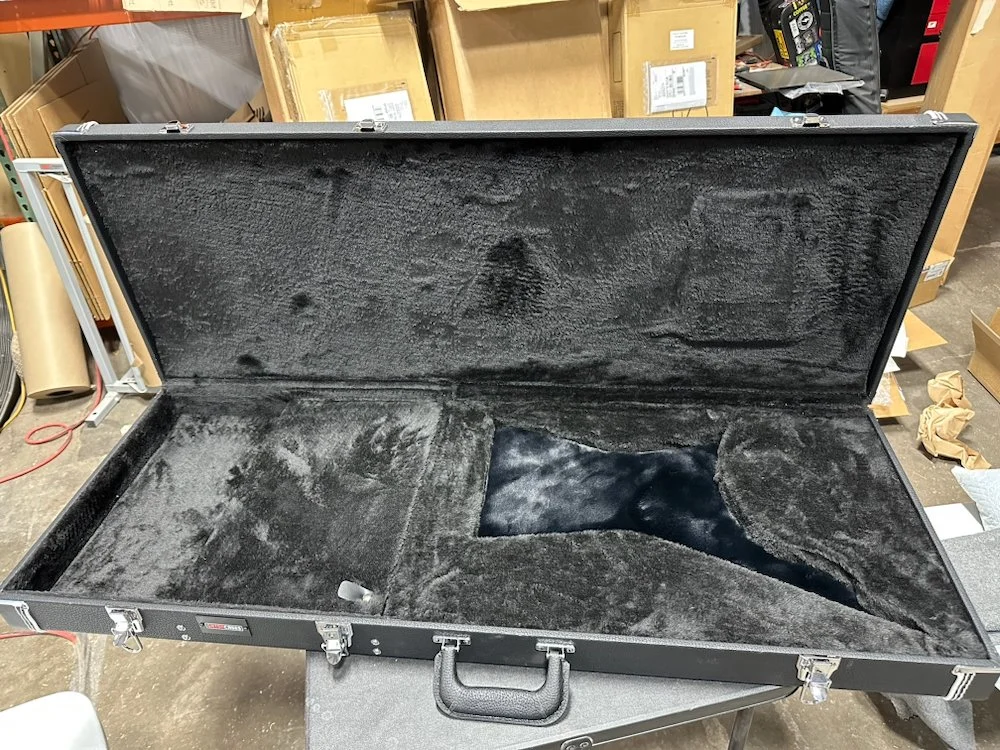
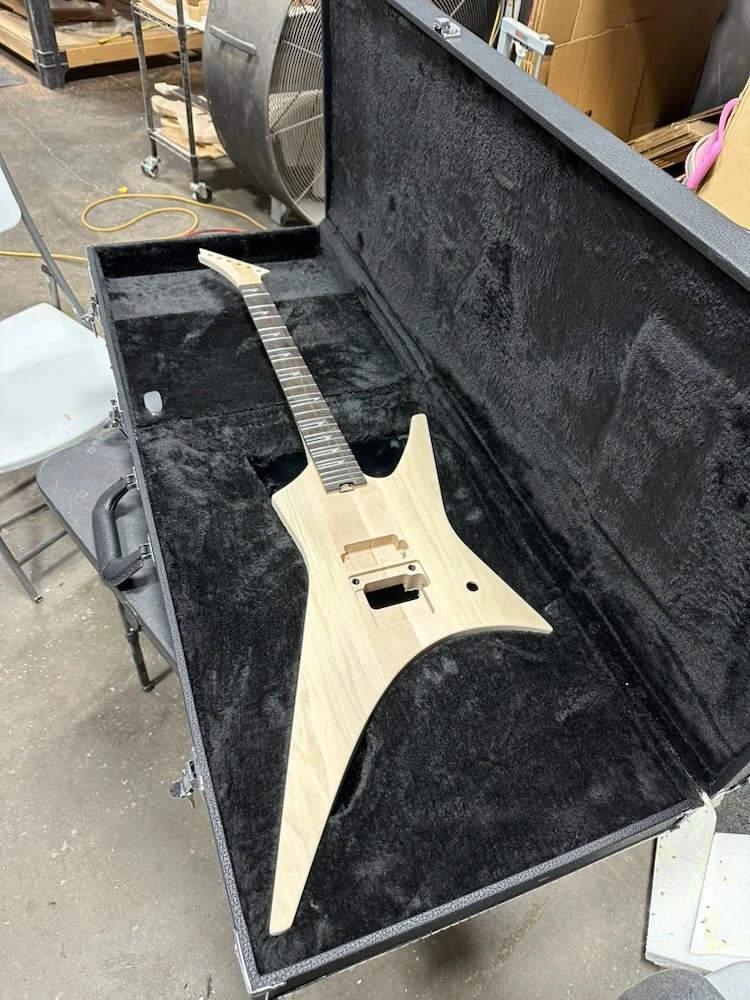
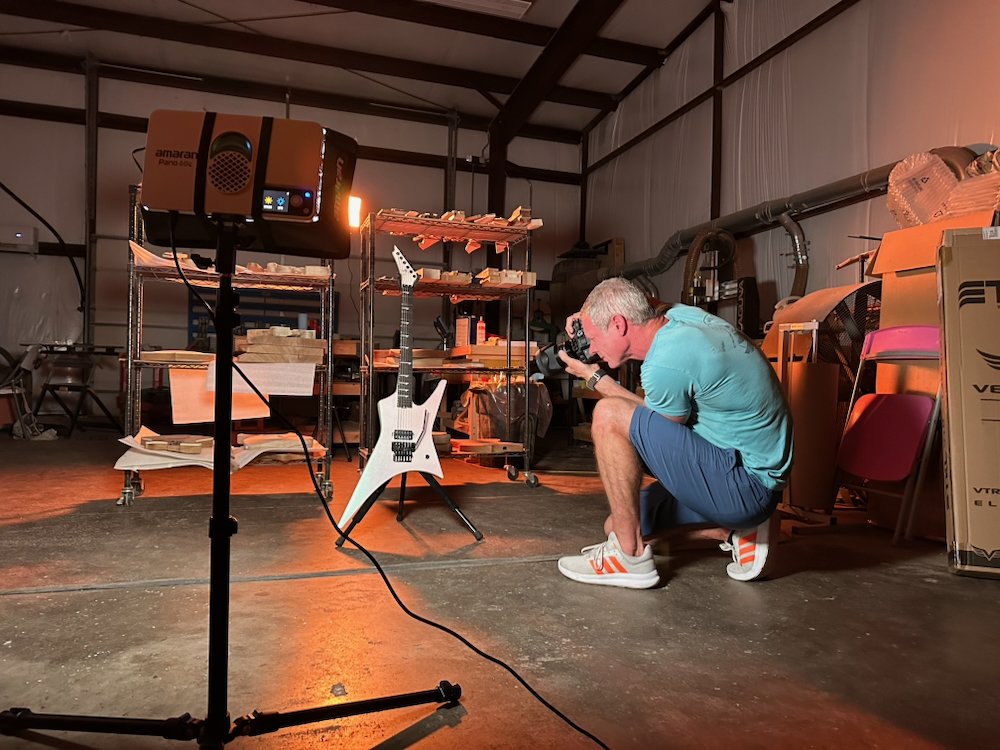
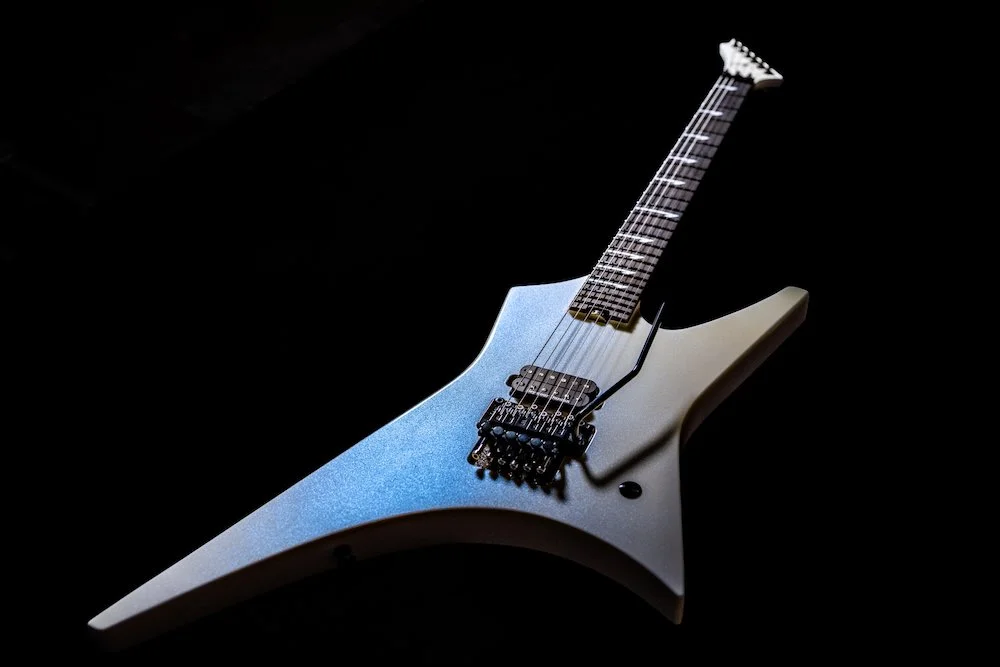
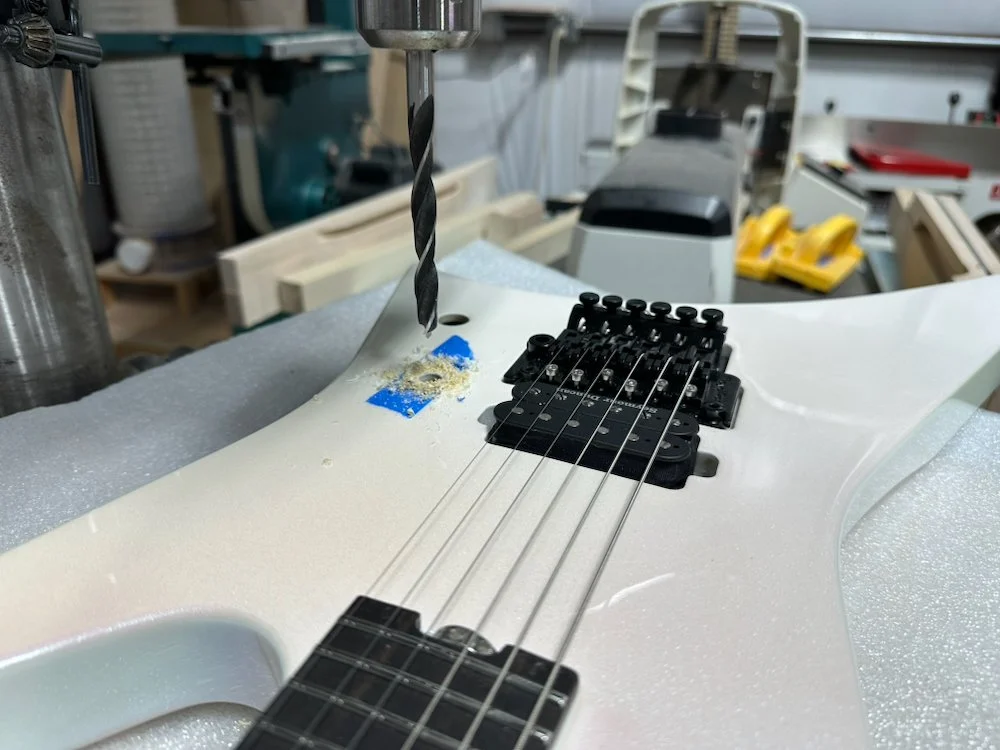
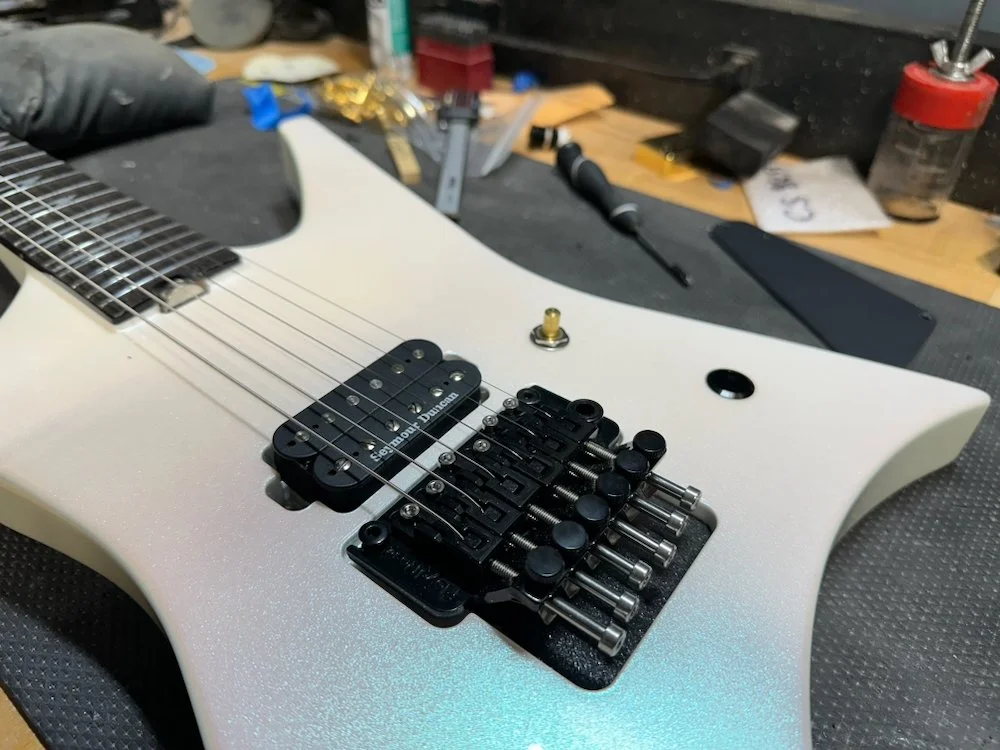
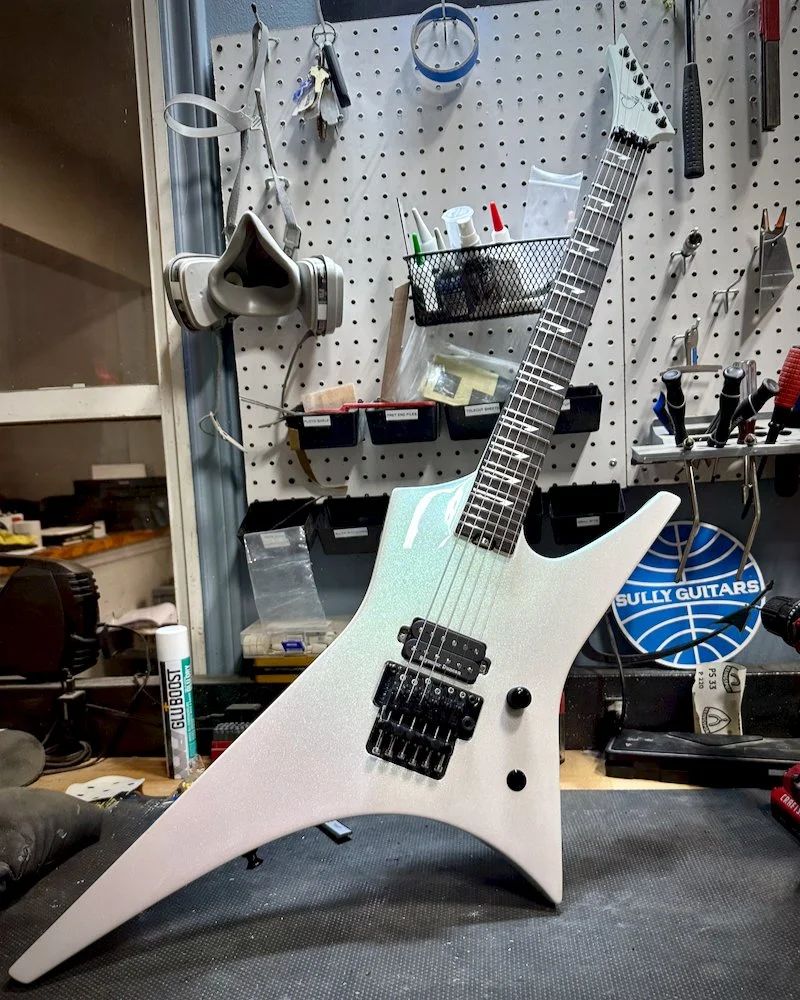
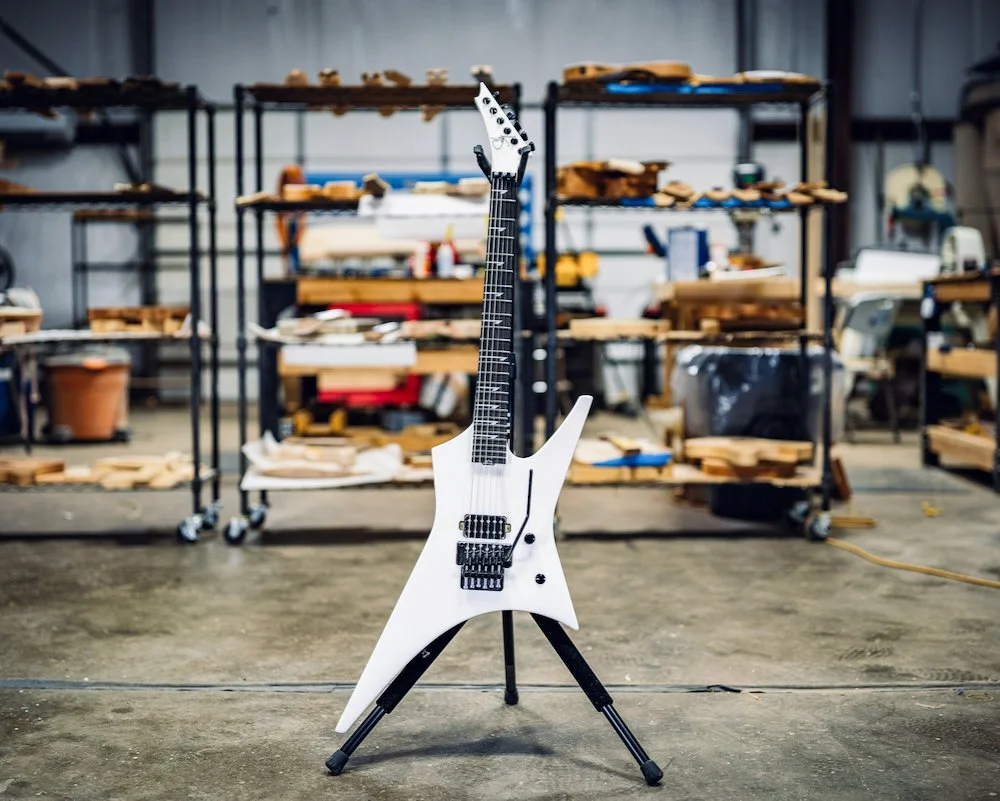
A few things worth sharing about the photo gallery above:
While I like having the output jack on the back of the long wing of these sorts of shapes, I do NOT enjoy drilling those wire channels. You see in the third photo that I fed some wire through; I do that and take a photo so I don’t have to wonder if the wires will feed through and freak myself out after it’s been painted. Past Sully™ did Future Sully™ a solid by snapping a photo.
Cases. They’re easily one of the worst parts of my job. I always say that the best advice I can offer another guitar builder is to design things that fit in standard sized cases. Of course, I never take my own advice. I have, however, become rather adept at finding a case that has potential and modifying the body compartment. I’ll tell you that the case lining makes a fuzzy mess when you cut it. It gets everywhere. Ev. Ree. Where.
“Why did you forget to drill a hole for a volume knob?” I didn’t. My original plan was to use a latching kill button to act as an on/off switch. I’ve done that on the Comets I’ve made, and I think it’s just a fun kind of thing. Hit the button and hold on and whatnot. Welllll, I hadn’t told you until now that one of the people I had sent photos of the design to was Our Pal Kiki Wong™. The plan was to finish the guitar alongside of the Concorde and Trella 24 we made for her, and she’d get to play them all at Lollapalooza. Kiki is a fan of the shape, but let’s be real, that was a huge show, and you shouldn’t have to think about your instrument. Not having a volume knob made it less intuitive, so while it was played in rehearsals, it wasn’t used at the show. Totally okay. So when I got the guitar back, I drilled a spot for a volume knob and now we have 100% more volume control. At the time I’m writing this (September 19th), the Scream is back with Aunt Kiki™ and is part of her touring rig and she’ll definitely have time to check it out on the Rats in a Cage Tour that starts in late September.
So what’s next?
Well, now that the model has been officially launched, I hope you order one! I know that the model will evolve a little, as they tend to do. I often say that you have to make about five of them to know what you’ve got, but I also don’t limit myself to five. One of the nice things about having my name on the headstock is that I can make changes whenever I want. I do have a few more ideas for the model, and so I think that this spark of creativity that started in the Spring will continue forward. I’m incredibly grateful for the creative sparks that I’ve had recently. In a very difficult year, it’s been a welcome bright spot.