
The story behind the build: ‘71 Trella 24
“The ‘71 is a 22 fret model. Full stop.” - Sully
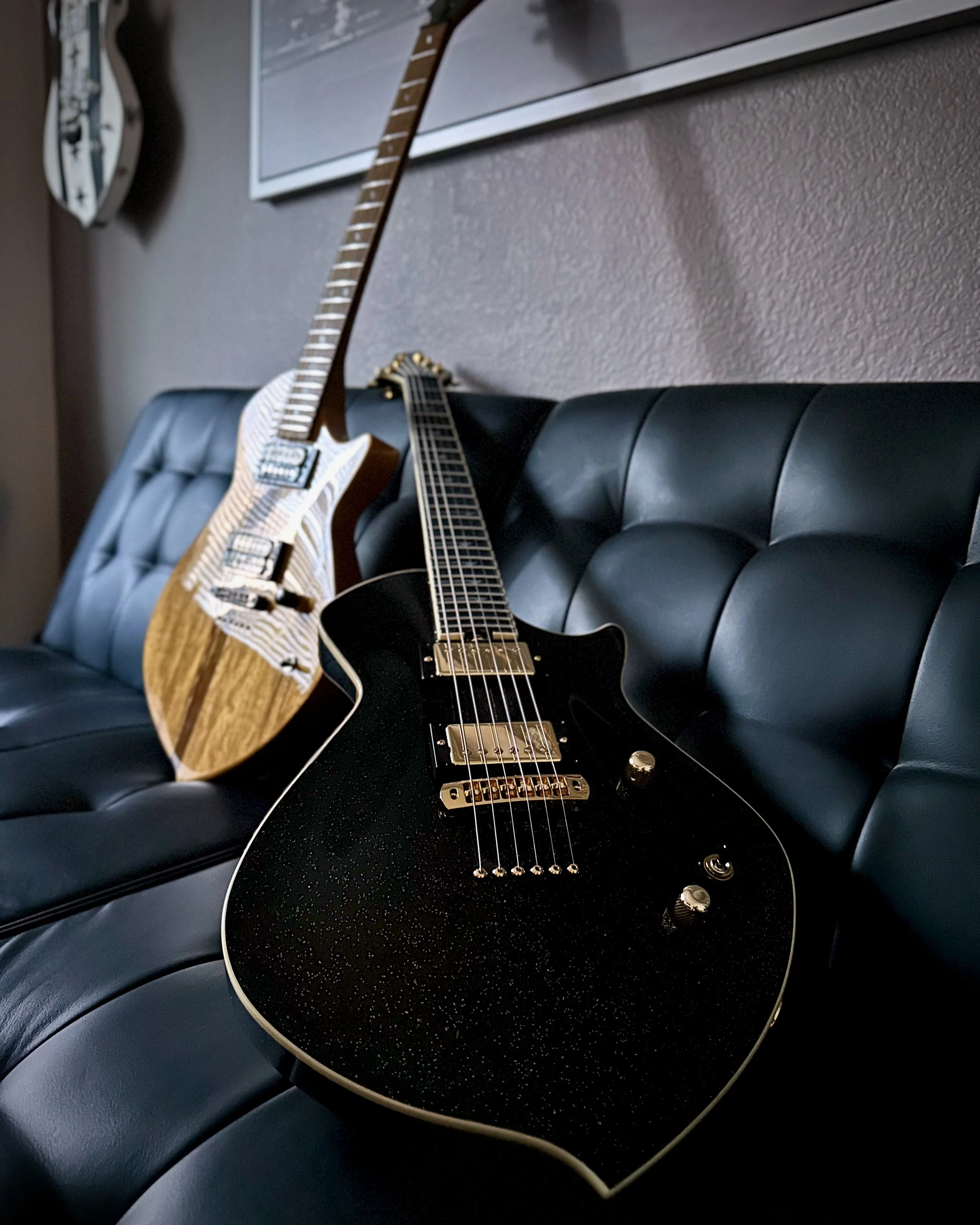
The ‘71 Trella 24 with the original ‘71 prototype while the art piece hangs in the background
That’s what I’ve said for 15 years. Why? Well, that’s what it was intended to be. Generally speaking, if I design a new instrument, I pretty much default to a 22 fret spec. I dunno why, it’s just part of the magic that is me, I guess. Most models eventually have a 24 fret counterpart, but the ‘71 was one that I was adamantly against; it’s already on the long side, and I didn’t want to make it longer by shifting everything away from the body in order to add the extra frets and maintain access. I was concerned that bringing the pickups closer together removes some of the balance of the open space. All in all, I just didn’t want to do it, and have said no for a long time.
Enter the baritone
I like baritones. I had one years ago, although I didn’t really play it much. I liked how it sounded in that it was more like a cello than a violin. They sound massive. I like that. I’m happy to make baritones of pretty much any of our models that I think it’ll work on, and the ‘71 was one I thought it would work on. I also think a ‘71 Starling bass could be cool, but that’s another conversation. When a prospective client asked if I’d be open to making him a ‘71 Trella baritone with a Floyd, I was in. And then came the request to which I’ve always refused; 24 frets. So, why did I finally say yes? Well, the scale was going to make a long guitar longer, (although the longer scale also allowed me to keep the distance between the pickups from being too crowded), and the Floyd would mitigate my concern about having too much open space in the lower portion of the body. Those points, along with the fact that making a baritone version was going to require some design work (especially in the cutaway), I was at least open to seeing if it would work.
Spoiler alert: it worked.
The Kiki Konnektion™
At the same time the baritone was in the design phase, I was working out specs of guitars to be made for Kiki Wong. The original plan of two Concordes (one with a locking tremolo, and one with a fixed bridge/string through configuration) became a Concorde and a ‘71 Trella with the stipulation that 24 frets are a must have for Kiki. Okay, wellllll, I know it works on a baritone, so let’s see how it goes on a 25.5 scale model. Having the fixed bridge/string through setup helped ease my concerns about open space in the lower part of the body, and since the original ‘71 prototype had a fixed bridge/string through setup, I thought that it was cool to revisit that for the newest version of the ‘71 model.
Feeling creative
While I work in a creative field, it doesn’t always feel that way; I don’t make many one off builds, and sometimes you just keep “making the thing.” I’m by no means complaining, here, but I welcomed the burst of creativity; I had recently finished the “This is (NOT) a guitar” art installation piece from NAMM, and it was nice to have some more new versions of the model whose design has the most “me” in it.
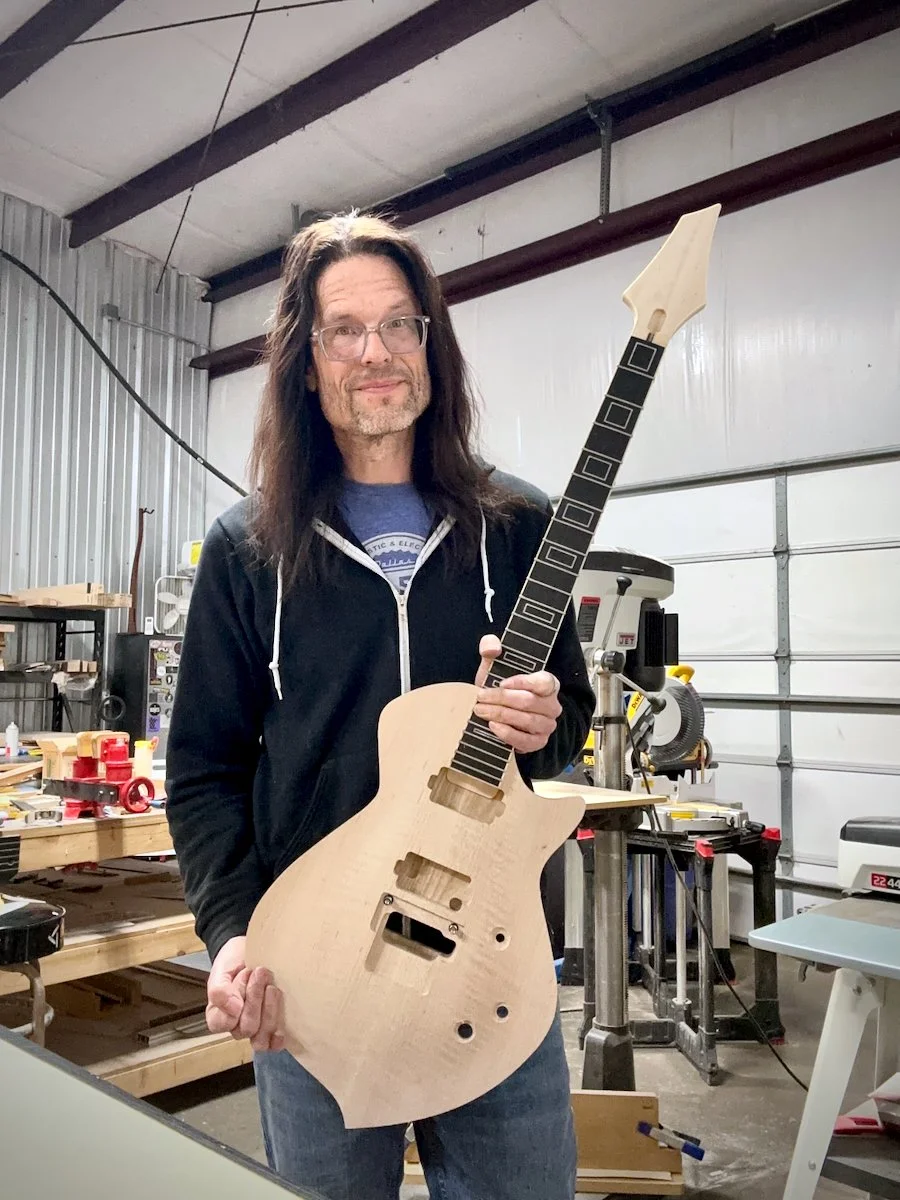
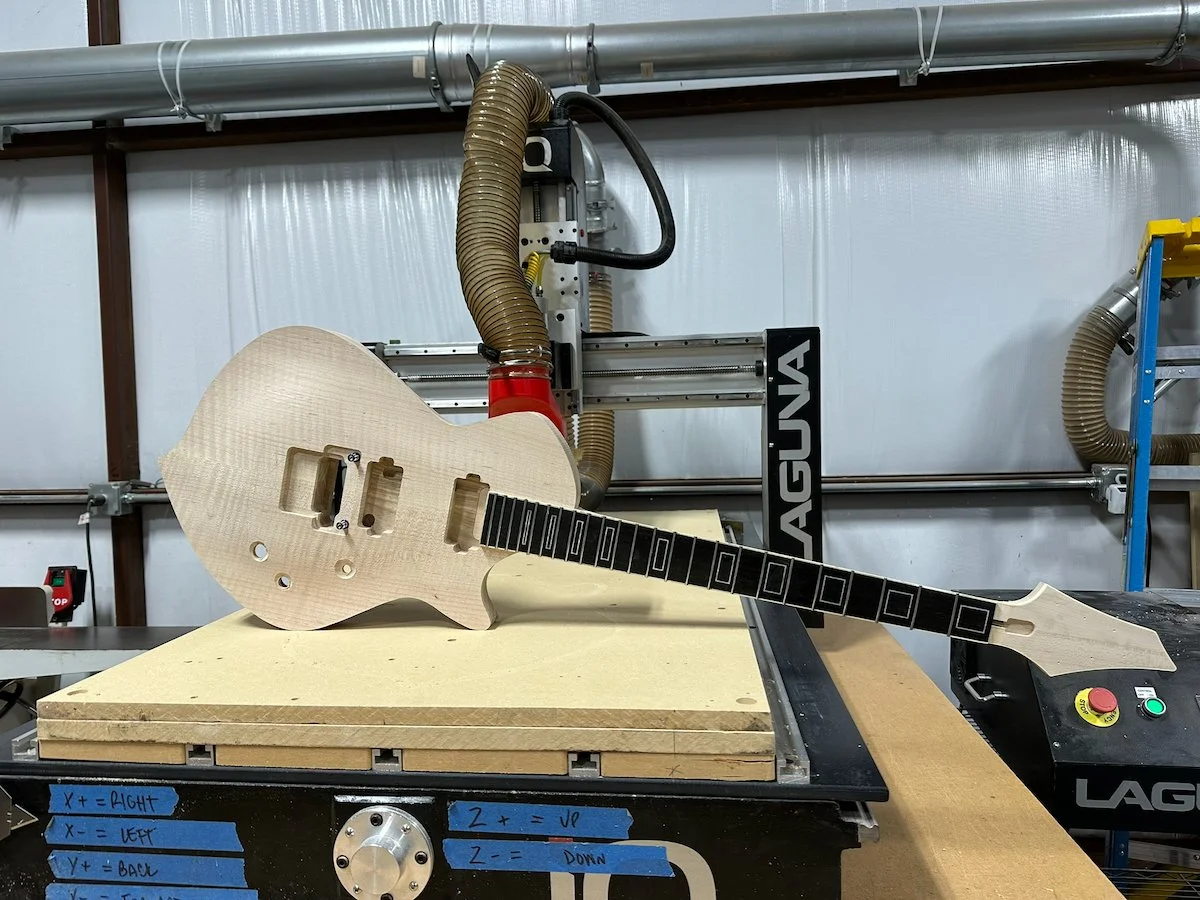
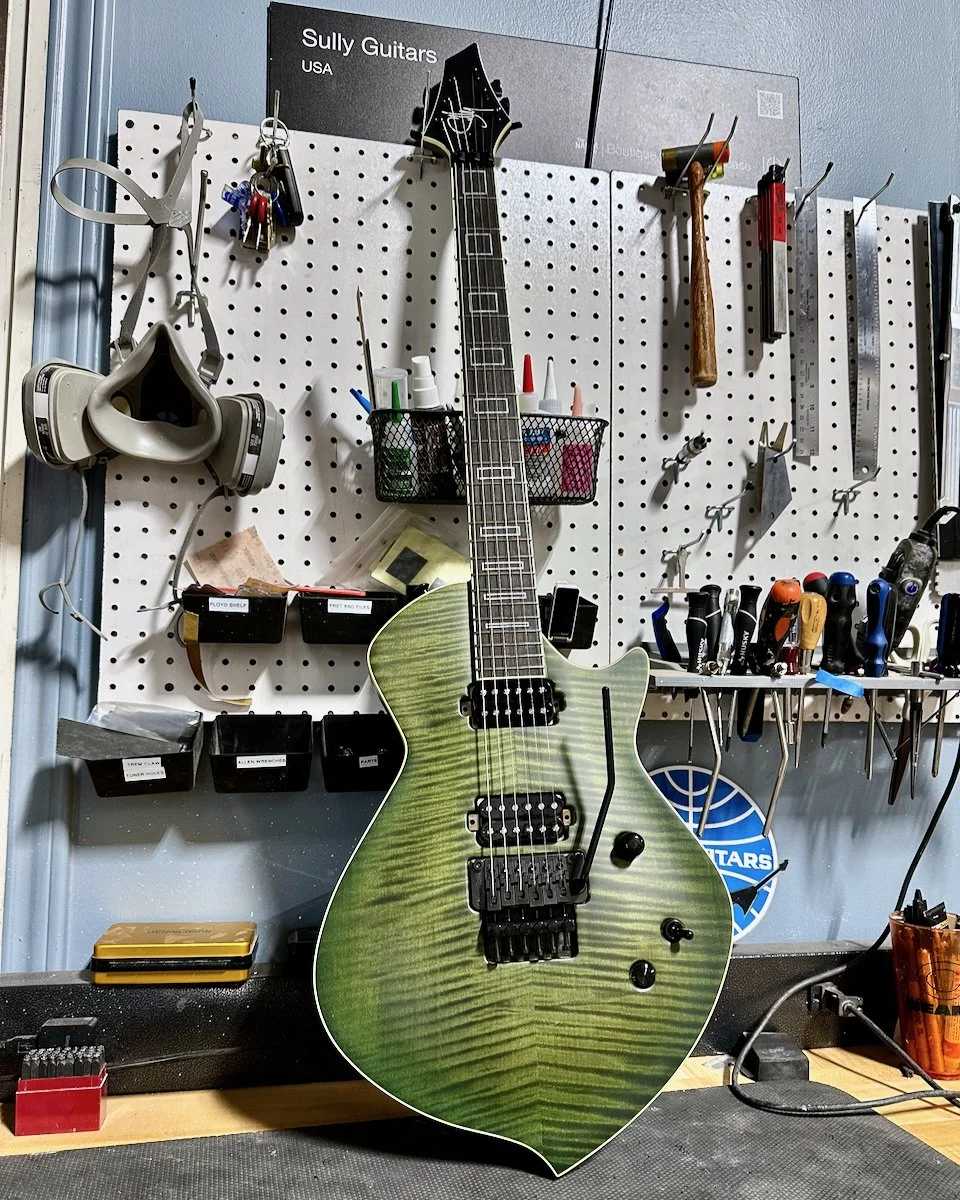
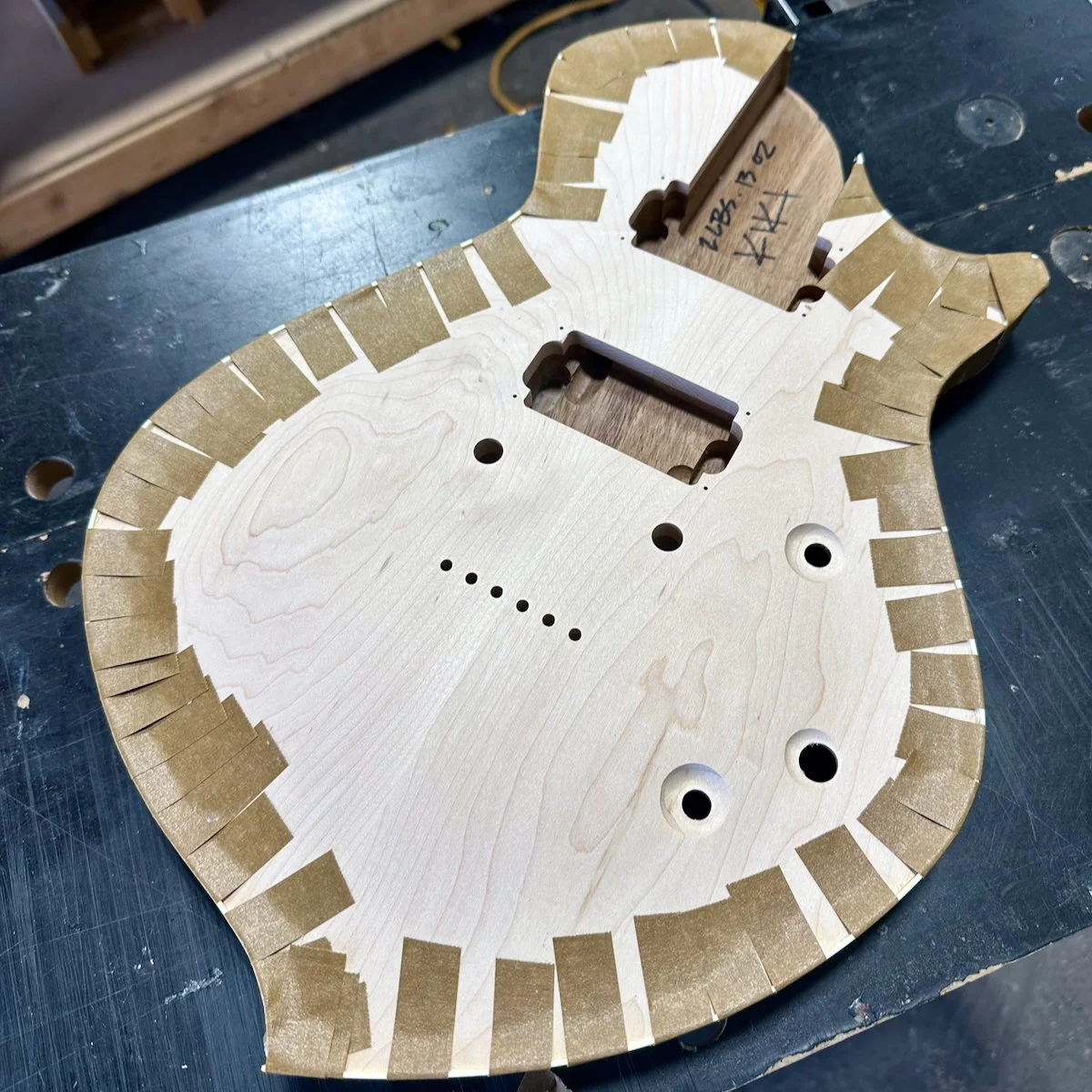
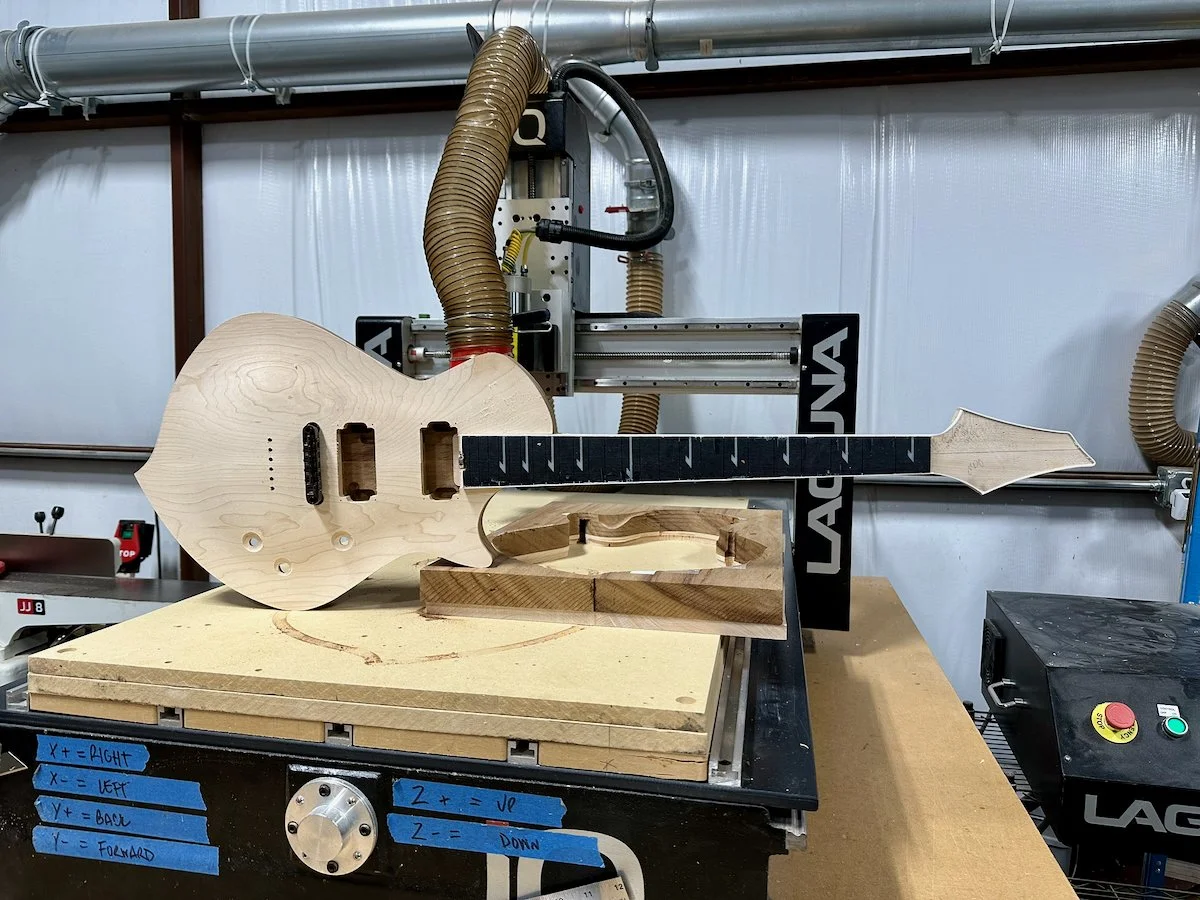
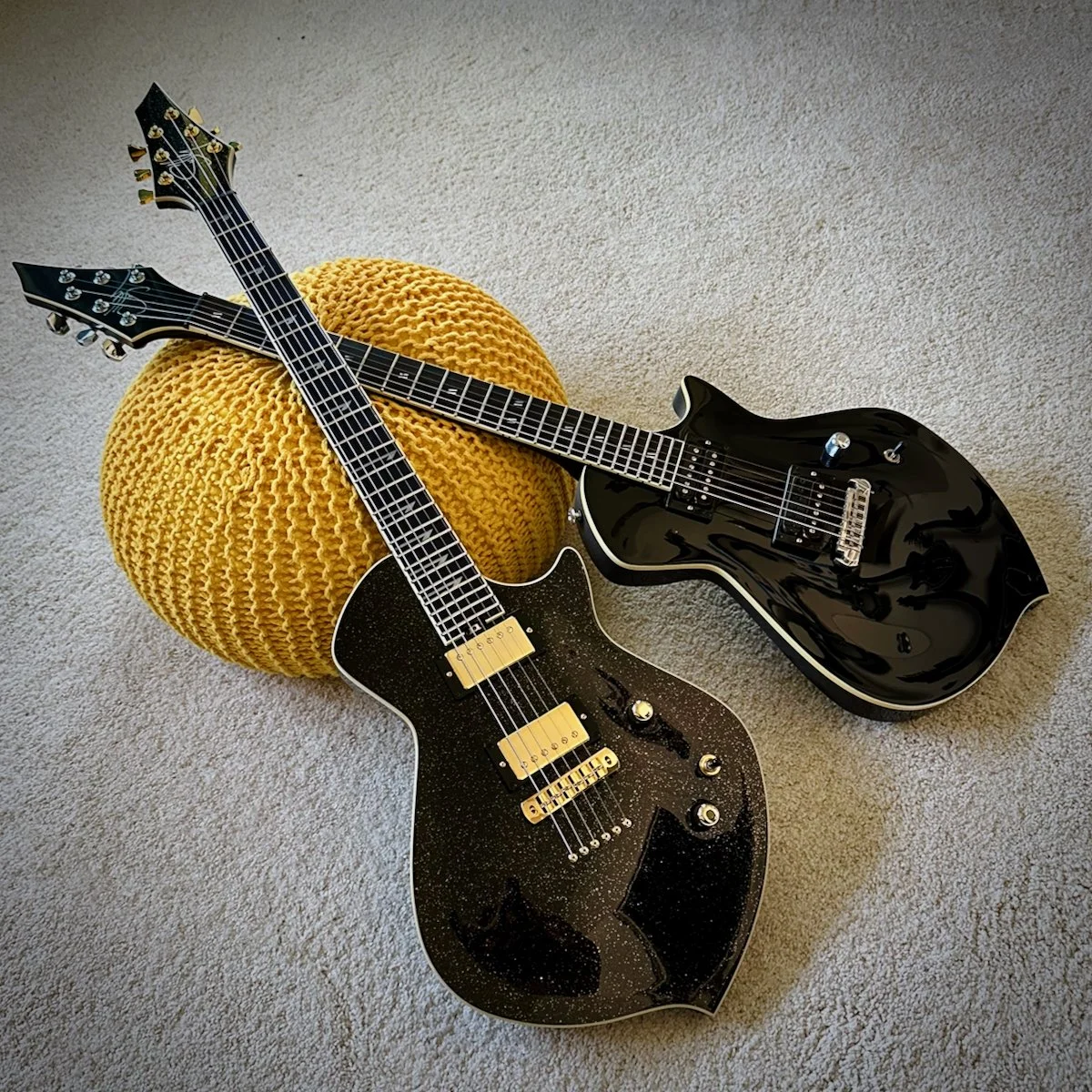
As hinted at the beginning of this article, the ‘71 design turns 15 this year (its official birthday is September 13th). Time both flies and drags, doesn’t it? It doesn’t seem that long ago when I came up with the original sketch for the model, but it also feels like an eternity. I think it’s neat that over the years, people tend to refer to the model as a Trella, and I’m sure she would love to know that. When I’ve been fortunate enough to have people playing them on larger stages, I’ll tell Mrs. Sully that her mom has now played at Ryman Auditorium, or Lollapalooza, or the LA Memorial Coliseum, etc. I know that if she were still with us, she’d smile and say “well yes, of course!”
Thanks for reading; I’m really excited about this development of the ‘71 model, and I hope you are, too.
Your pal,
Sully